
Journal · 5 min read
Beatmatching explained in plain English
What beatmatching is, why it matters and how DJs learn to do it by ear.
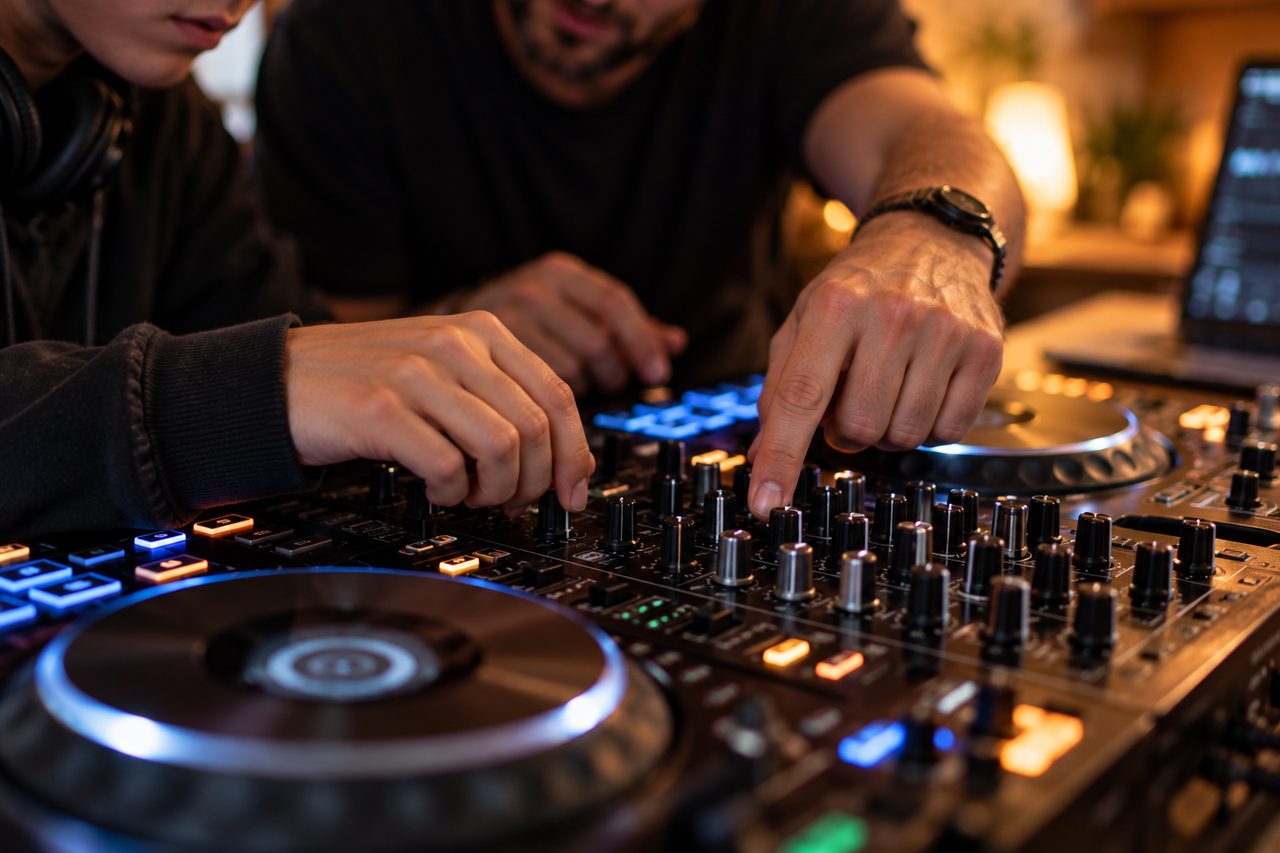
Beatmatching is the skill at the heart of DJing: getting two tracks to play at the same speed, with their beats lined up, so you can blend from one to the other without the rhythm falling apart.
The two parts
Tempo: each track has a speed, measured in beats per minute (BPM). You adjust the speed of the incoming track with the pitch or tempo fader until it matches the one playing.
Phase: even at the same speed, the beats need to land at the same moment. You nudge the jog wheel forward or back until the kick drums hit together.
How it's done by ear
With headphones on, you listen to the incoming track in one ear and the speakers in the other. If the beats drift apart, you work out whether the new track is running fast or slow and correct it. At first it sounds like galloping horses; with practice, you start to hear it instantly.
What about the sync button?
Sync is a useful tool and plenty of professional DJs use it. But learning to beatmatch by ear means you understand what's happening, you can fix problems when tracks drift, and you can play on any equipment, including turntables and older club setups.
Tips that speed it up
- Start with two tracks of similar tempo and simple, steady drums.
- Focus on the kick drum first, then the hi-hats.
- Make small adjustments rather than big ones.
- Practise little and often.
A tutor can hear in seconds what's going wrong and tell you which way to adjust, which is why most people get there far faster with lessons than alone.