
Journal · 5 min read
How long does it take to learn to DJ?
Realistic timescales from first mix to first gig, and what speeds it up.
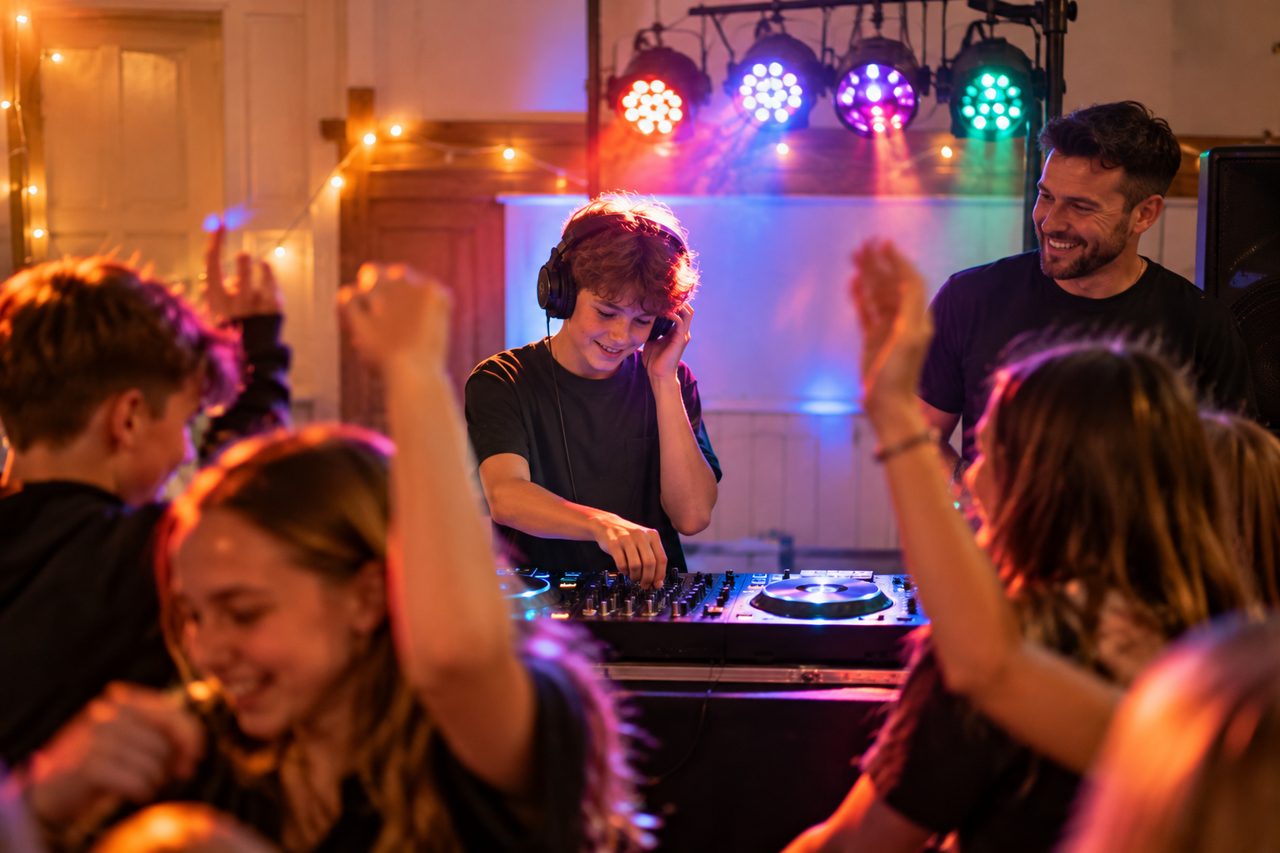
It's the question almost everyone asks before starting. The honest answer: you can learn the basics surprisingly quickly, but getting good enough to play confidently in front of people takes regular practice. Here's what most students can expect.
The first few lessons
In the first sessions you'll learn how the equipment works: the decks or jog wheels, the mixer, EQ and the headphones. Most people manage a simple blend between two tracks by the end of their first or second lesson. It won't be perfect, but it's the moment people get hooked.
Beatmatching by ear
Beatmatching, keeping two tracks in time without relying on the sync button, is the skill that takes longest at the start. With a tutor and some practice between lessons, most students get comfortable within a handful of weeks. Without guidance it can take months, mostly because it's easy to practise the wrong thing.
Building a set
Once the mixing is steady, the focus moves to choosing tracks that work together, phrasing your mixes so they land in the right place and building energy across 30 to 60 minutes. This is where you start to sound like a DJ rather than someone pressing play.
Playing in front of people
Many students are ready to play a short set at a party or family event after a couple of months of regular lessons and practice. Bars and clubs usually come later, once you've built confidence and a few recorded mixes.
What makes the biggest difference
- Practice between lessons. Even 20 minutes a few times a week adds up quickly.
- Feedback. A tutor spots small habits early, before they become hard to fix.
- Music you love. You'll practise more if you're mixing tracks you actually want to hear.
- A goal. A party, a recorded mix or a school event gives practice a purpose.
Everyone learns at a different pace, and that's fine. One-to-one lessons mean you go at yours.