
Journal · 6 min read
How to find a good DJ tutor (and what to ask before you book)
Seven questions that separate a real DJ coach from someone who owns a controller.
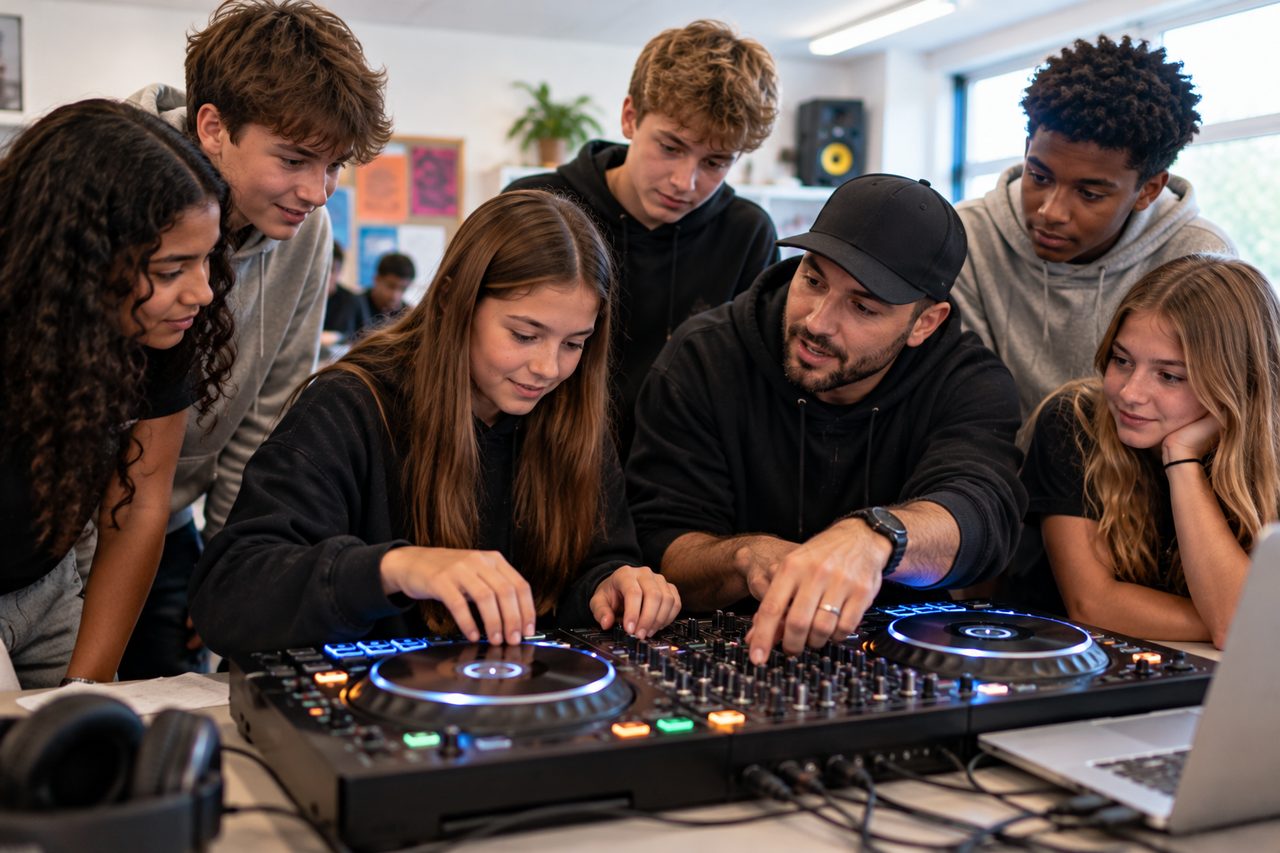
Search for a DJ tutor and you'll find everything from bedroom DJs offering a quick hour to structured courses with working club DJs. Both can be fine, but they're not the same thing. A good tutor gets you mixing confidently in weeks, not months, and stops bad habits forming before they set in. Here's how to tell them apart.
1. Do they actually play out?
Ask where they've played recently. A tutor who still DJs at clubs, bars, parties or on radio knows what works in front of a real crowd today: how sets are built, what promoters expect and how the kit in venues is set up. That experience is hard to get from a manual.
2. Can they explain, not just show?
Some brilliant DJs are poor teachers. In your first conversation, ask them to explain beatmatching or phrasing in plain words. If the explanation makes sense to you, the lessons probably will too.
3. Is it one to one?
Group workshops are fun, but you spend most of the time watching. One-to-one lessons mean your hands are on the decks for most of the session and the pace fits you, which matters even more for younger students or anyone with additional needs.
4. Is there a plan?
Ask what the first few lessons cover and how you'll know you're improving. A good tutor will have a rough path: equipment and EQ, beatmatching by ear, phrasing, building a set, then performance. Without a plan, lessons drift.
5. Are they DBS checked (for young students)?
If the lessons are for a child or teenager, the tutor should hold an enhanced DBS check and be comfortable with a parent or guardian being around. Don't be shy about asking to see it.
6. Do you need your own equipment?
You shouldn't. Our tutors teach on your own controller, so you'll need your own controller, a Pioneer DDJ-FLX4 as a minimum. If you haven't got one yet, we can add one to your course. A good tutor will also give honest advice on what to buy, rather than steering you to the most expensive option.
7. What happens after the basics?
The best tutors help you take the next step: recording a mix, playing at a party, getting a first gig or building up to club sets. Ask what previous students have gone on to do.
A quick checklist
- Plays out regularly
- Explains clearly
- Teaches one to one
- Has a plan for your first lessons
- DBS checked for under-18s
- Learn on your own controller (FLX4 minimum)
- Helps you beyond the basics
Tell us where you are and what you'd like to learn, and we'll match you with a tutor who ticks these boxes.